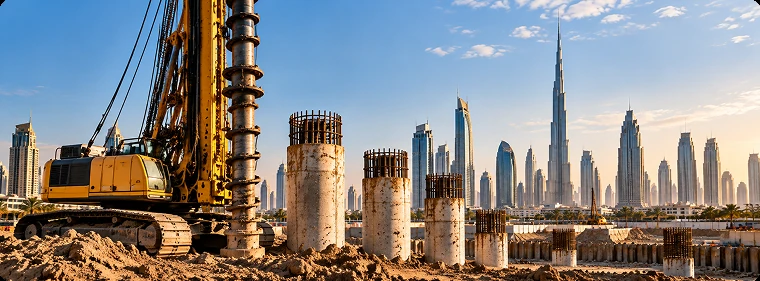
Deep foundations
When near-surface soils are unsuitable for the proposed loads, piles can carry forces to deeper strata. Selection depends on the geotechnical investigation and structural requirements.
Explore the method ↗
Explore the relationship between foundation systems, excavation support and the conditions below the surface. These technical illustrations explain common methods; suitability and availability for a ROCKMAX project must be discussed individually.
When near-surface soils are unsuitable for the proposed loads, piles can carry forces to deeper strata. Selection depends on the geotechnical investigation and structural requirements.
Explore the method ↗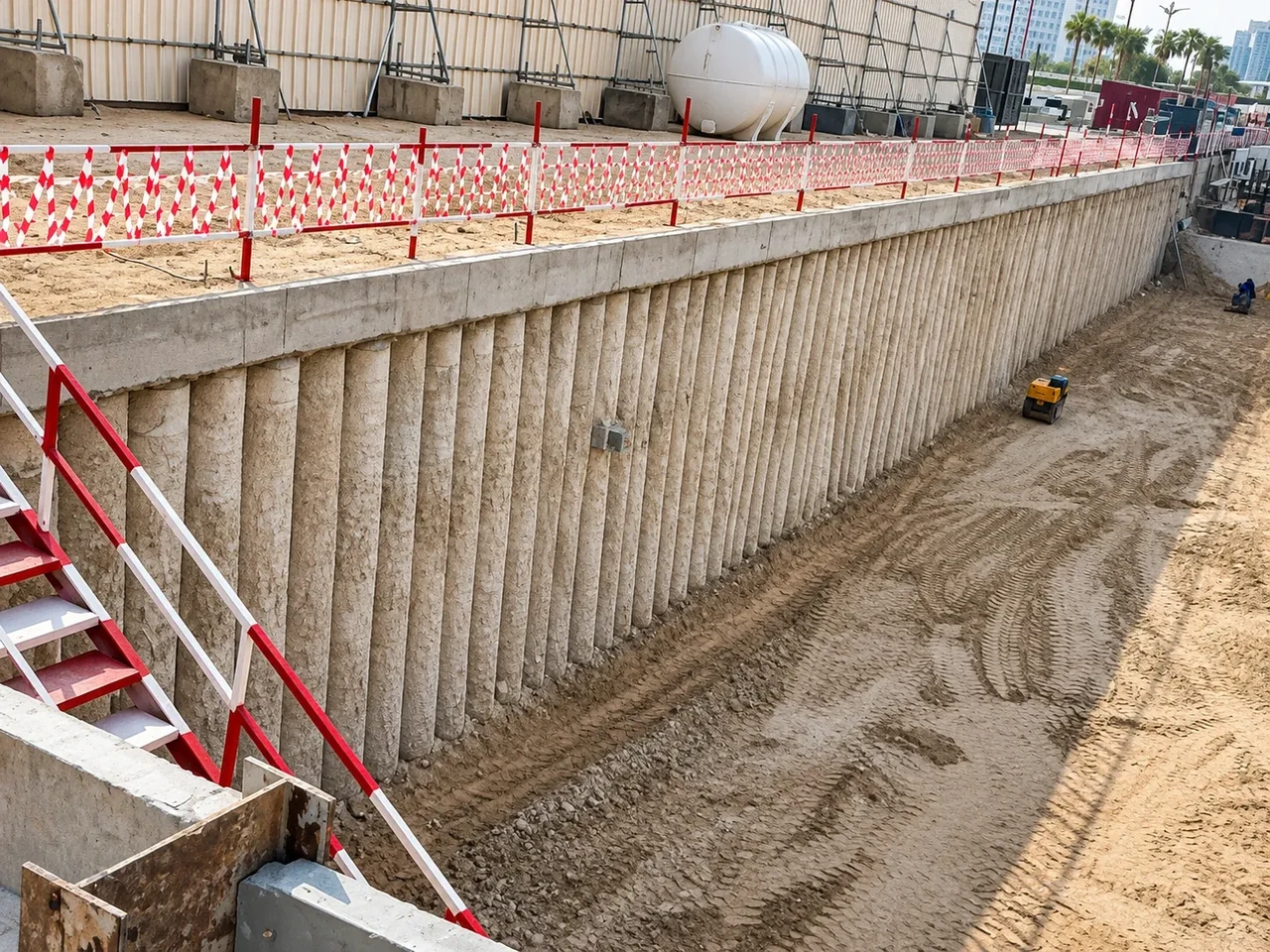
Intersecting concrete piles create a continuous retaining barrier around an excavation. The geometry can also help manage seepage where the system is designed for it.
Explore the method ↗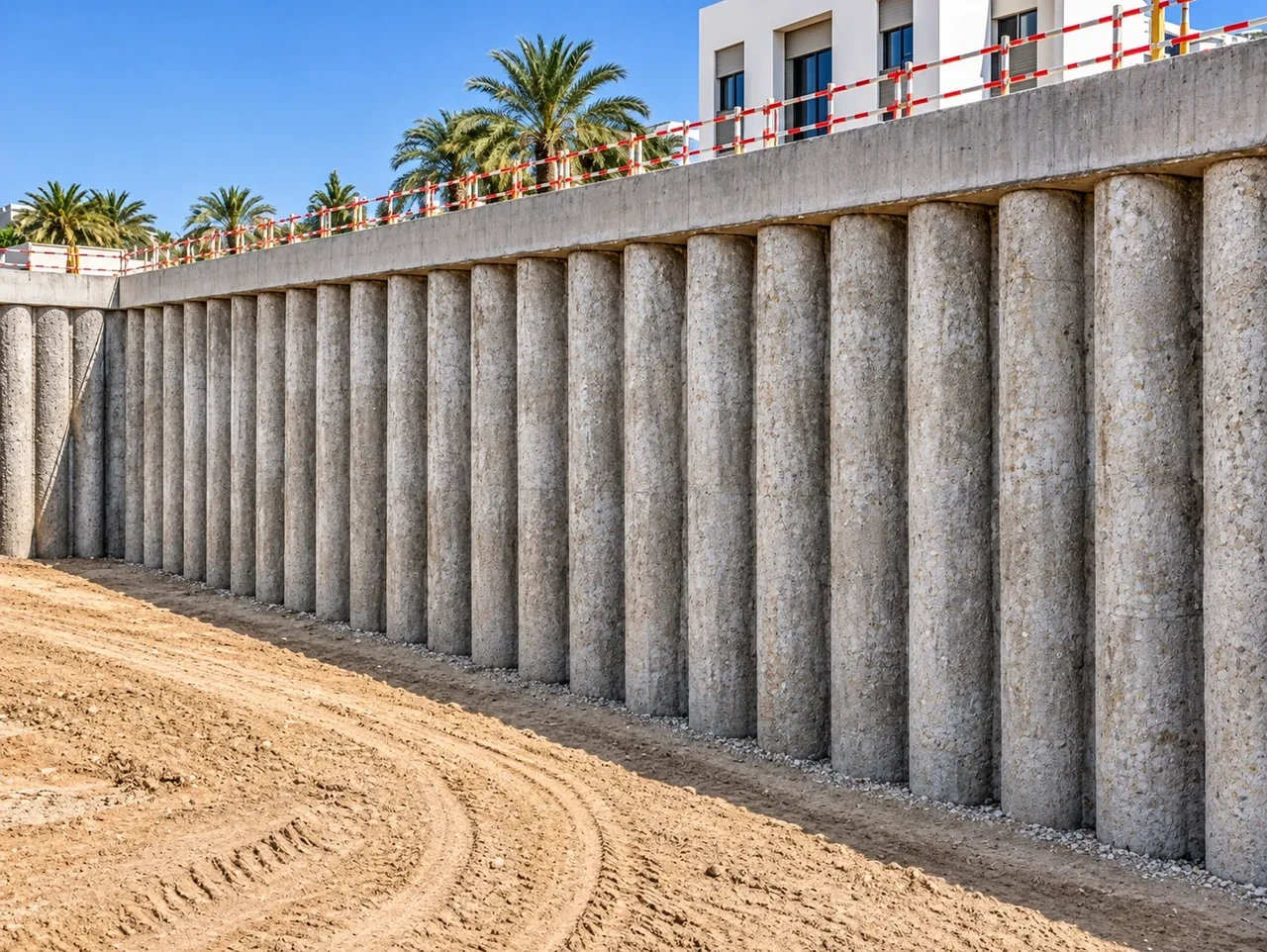
A row of closely spaced piles supports soil along an excavation perimeter. The gaps mean separate groundwater measures may be needed.
Explore the method ↗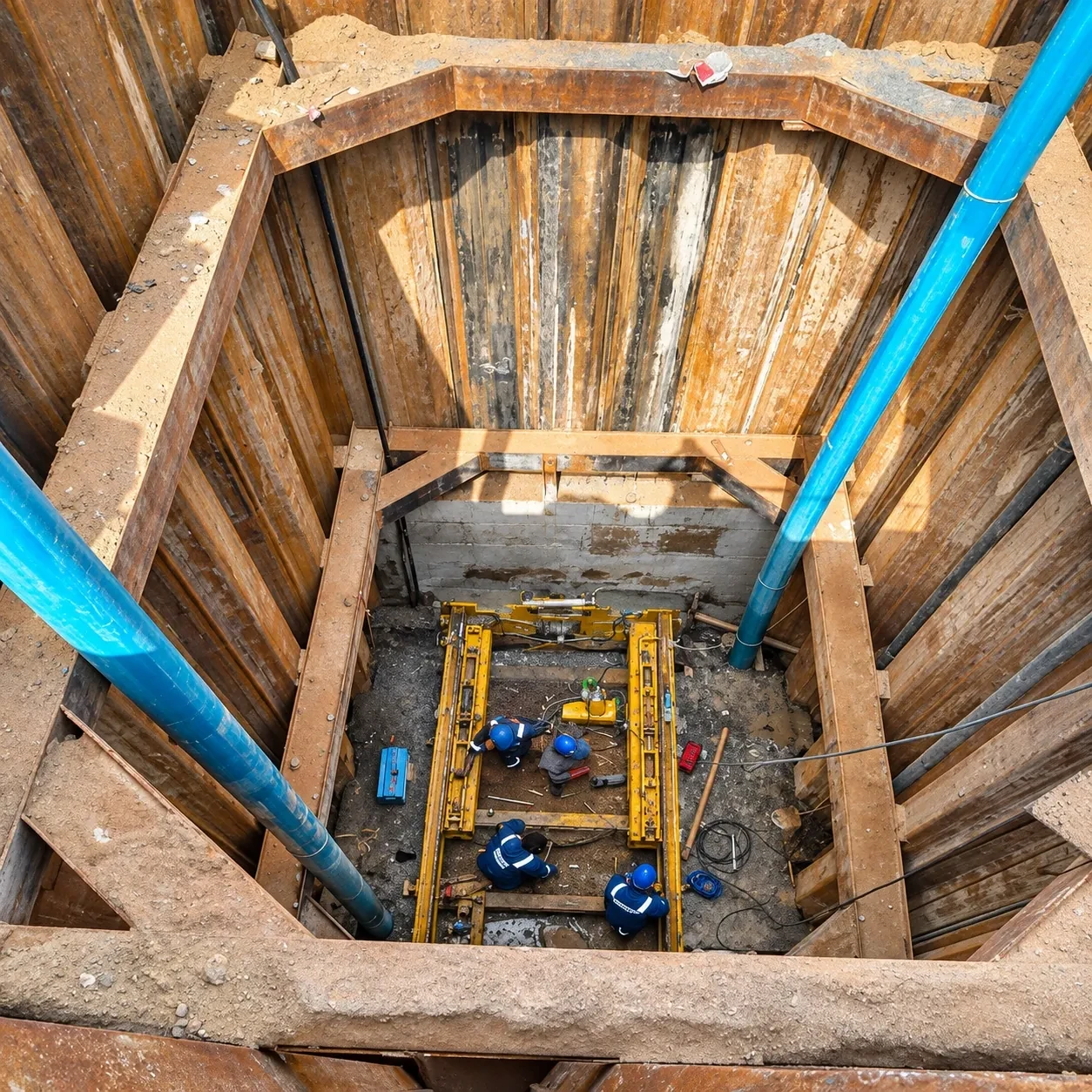
Interlocking steel sections form a retaining wall. The installation technique and support arrangement depend on site and ground constraints.
Explore the method ↗Soil and groundwater information informs design.
The structure determines the required support.
Adjacent properties and excavation geometry influence retaining needs.
Available working area and restrictions affect planning.
Drag or use the controls to rotate a schematic representation of piles below a foundation cap. Not an engineering design.
Educational comparison only. These are not additional confirmed ROCKMAX services or design recommendations.
Load transfer to ground
Structural loads and ground profile
Read guide ↗Overlapping retaining wall
Groundwater and retained ground
Read guide ↗Closely spaced retaining piles
Soil and gaps between piles
Read guide ↗Interlocking retaining sections
Installation and site constraints
Read guide ↗